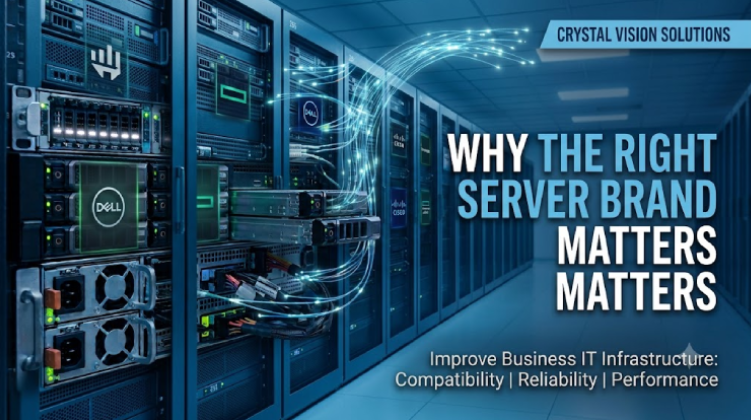
Modern businesses rely on servers to power critical operations such as virtualization, cloud services, databases, file sharing, enterprise applications, and backup systems. Whether supporting a growing startup or a large enterprise, the performance and reliability of a server directly influence productivity and business continuity.
One of the first decisions organizations face when planning or upgrading their IT infrastructure is selecting the right server brand. While hardware specifications are important, choosing a trusted server manufacturer can provide advantages in reliability, scalability, compatibility, and long-term support.
Enterprise Servers Are Built for Continuous Operation
Unlike consumer desktop computers, enterprise servers are engineered to operate around the clock under demanding workloads. They are designed with advanced cooling systems, redundant power options, enterprise-grade memory support, and remote management capabilities.
These features help organizations maintain high availability while minimizing unexpected downtime that could interrupt daily business operations.
Reliable server hardware becomes increasingly important as businesses grow and their IT requirements become more complex.
Different Businesses Have Different Server Requirements
There is no single server that suits every organization. A small business may only require a file server and backup solution, while larger companies often need infrastructure capable of supporting virtualization, cloud environments, databases, and high-performance applications.
Before selecting a server, organizations should evaluate factors such as:
- Expected workload
- Number of users
- Storage requirements
- Memory capacity
- Processor performance
- Future scalability
- Redundancy requirements
- Budget and maintenance plans
Careful planning helps ensure that the selected server can continue supporting business needs as they evolve.
Brand Reliability Plays an Important Role
Well-established enterprise server manufacturers invest heavily in research, engineering, firmware development, and long-term product support. This often results in systems that provide greater stability and compatibility for business environments.
Businesses looking for enterprise-grade SERVERS should evaluate factors such as hardware reliability, upgrade flexibility, warranty options, component availability, and long-term support before making purchasing decisions.
Selecting a trusted server platform can reduce maintenance challenges and simplify future hardware upgrades.
Scalability Supports Future Growth
Technology requirements rarely remain static. As businesses expand, servers often need additional memory, larger storage arrays, faster processors, or expanded virtualization capacity.
Choosing a server platform that supports future upgrades can reduce replacement costs and extend the useful lifespan of existing infrastructure.
Scalable hardware allows organizations to increase resources gradually rather than replacing entire systems whenever demand grows.
Hardware Compatibility Improves System Stability
Enterprise servers consist of multiple components that must work together efficiently. Processors, memory modules, RAID controllers, storage drives, network adapters, and power supplies should all be compatible with the server platform.
Using certified enterprise hardware helps reduce compatibility issues while improving system stability and performance.
Organizations should always verify compatibility before upgrading or replacing critical server components.
Remote Management Simplifies Administration
Modern enterprise servers often include remote management technologies that allow IT administrators to monitor hardware health, access system logs, perform diagnostics, and manage servers without physical access to the machine.
These capabilities can reduce maintenance time, improve troubleshooting efficiency, and support organizations with multiple office locations or remote infrastructure.
Remote administration also minimizes downtime by allowing faster responses to hardware events.
Energy Efficiency Can Reduce Operating Costs
Servers typically operate continuously, making energy efficiency an important consideration.
Modern enterprise hardware often includes intelligent power management technologies that optimize power consumption according to workload demands. Lower energy usage may reduce electricity costs while generating less heat, which can also reduce cooling requirements inside server rooms or data centers.
Although energy efficiency should not be the only purchasing factor, it can contribute to lower long-term operating expenses.
Ongoing Maintenance Protects Server Performance
Even high-quality server hardware requires regular maintenance.
A proactive maintenance strategy may include:
- Monitoring hardware health
- Installing firmware updates
- Replacing aging components
- Reviewing storage performance
- Checking system logs
- Testing backup procedures
- Cleaning server environments to improve airflow
Routine maintenance helps identify potential issues before they affect production systems.
Invest in Infrastructure That Supports Business Goals
Purchasing enterprise hardware should be viewed as a long-term investment rather than a short-term expense.
Reliable servers help organizations maintain application availability, improve operational efficiency, support future expansion, and reduce the risk of unexpected hardware failures.
By selecting the right platform from the beginning, businesses can build an infrastructure that continues delivering value for many years.
Final Thoughts
Enterprise servers are the foundation of modern business IT infrastructure. Choosing the right server brand involves more than comparing specifications—it requires considering reliability, compatibility, scalability, management features, and long-term support.
Organizations that carefully evaluate their workload requirements and invest in dependable enterprise hardware are better positioned to maintain stable operations while adapting to future business growth.
For businesses researching SERVERS BY BRAND, choosing enterprise-grade solutions that align with current needs and future expansion plans can provide lasting performance, reliability, and operational confidence.