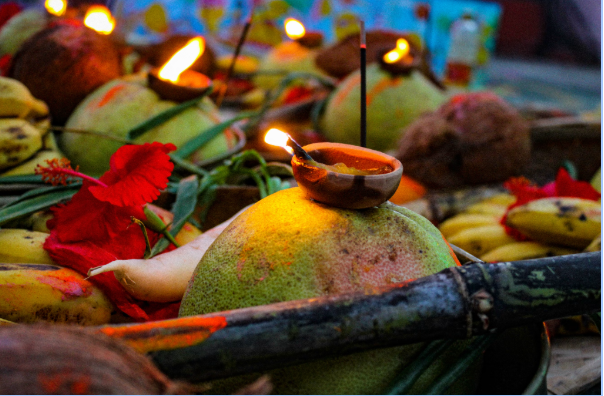
On the evening of the third day of Chhath, the ghat fills long before the sun begins to drop. Women in bright cotton sarees wade into the river up to their waists, holding bamboo soops piled with thekua, bananas, sugarcane and a lit diya. Nobody hurries at all. The whole crowd faces west and waits for the Arghya, the offering made to the setting sun, and a few quiet lines of verse often rise with the smoke of the incense.
Those lines now travel on phones as much as on lips. Families in Patna, Ranchi or Delhi send each other shayari while the kids wait with the offering baskets, and during the long gaps between rituals many people also open a quick game to pass the time. A page such as jetx login shows how a short instant game is entered and what its screen looks like, which is handy if you only want to understand the format before the evening ritual begins.
What a Sunset Arghya Shayari Should Capture
A good verse for this moment is not decoration. It borrows from what you actually see at the water’s edge, such as copper light on the ripples, the smell of ghee and the cold of the river around the ankles. Poets who write for Chhath tend to keep the language simple because the audience includes grandmothers and toddlers.
Lines directly addressed to Surya Dev, or to Chhathi Maiya, sound far more natural than abstract praise. A couplet that says “the river holds the gold of the evening, and my prayer rests in it” works because it describes a real image, then adds a wish.
Short Couplets You Can Share at the Ghat
Here are a few original lines in English, written in the shayari rhythm of two balanced halves. Read them slowly. Each one is short enough to type in a family chat without losing the mood, and each starts from an image you can actually see at the water, not from a borrowed phrase. Try these three, and change a word or two so they sound like your own household:
- Sun sinks gently into the Ganga’s palm, and every worry floats away like a diya.
- Fasting lips, steady hands, one offering of milk, and the sky answers in saffron.
- Chhathi Maiya, keep our courtyards bright, as this river keeps the last light of day.
How to Match a Verse to the Moment
Not every line suits every hour of the festival. The four days of Chhath carry different moods, and a shayari that fits the sandhya Arghya may feel odd on the morning of the final offering. The table below sorts the usual choices by occasion.
| Moment | Mood | Best length |
| Nahay Khay, day one | Purity, gratitude | Two lines |
| Kharna, day two | Patience, sweetness | Two to four lines |
| Sandhya Arghya, day three | Reverence, calm | Two lines |
| Usha Arghya, day four | Hope, new beginnings | Four lines |
Notice that the sunset slot asks for the shortest form. People stand in cold water and hold heavy baskets, so a long poem never gets read aloud there.
The best habit is to write your verse a day early, on the second night, when the house smells of jaggery kheer. Then read it once to an elder, preferably someone who has fasted through all thirty six hours of the vrat and knows how thin the voice gets by the third evening. If they nod without asking for a translation, the line is ready for the ghat.
Writing in Hindi, English or Both
Mixed language shayari is perfectly normal now. A common pattern keeps the first line in Hindi, with words like “arghya”, “surya” or “vrat”, and lets the second line explain the feeling in English. This helps cousins abroad who understand the emotion but not every word.
Sending Verses Without Losing the Moment
A single well chosen couplet beats ten forwarded images. Send it before the family leaves for the ghat, then put the phone in a bag. The sunset lasts about twenty minutes in early November, and the Arghya is made at a precise point when the disc touches the horizon. Missing it for a screen is the one regret most devotees mention afterward. If you want to keep the verse, save it in your notes and read it again at home, when the diyas have burned low and the courtyard is quiet.